What is on the sheet
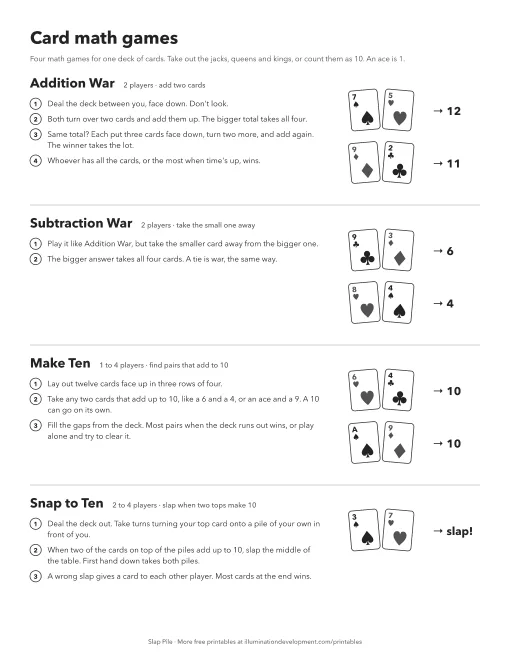
Four games, each with numbered steps and a pair of example cards worked out beside it. Addition War and Subtraction War are War with two cards each, added or taken away. Make Ten is a grid of twelve cards where you pick up pairs that add to ten. Snap to Ten is Snap, but you slap when two cards on top make ten instead of when they match.
Which one to start with
Make Ten first, because nobody has to be fast and a child can play it alone. Addition War next. It's the same War kids already know, and the bigger total is easy to check. Subtraction War and Snap to Ten come once adding to ten is quick, since Snap to Ten rewards knowing the pairs without counting on fingers.
Take the jacks, queens and kings out for younger players. The sheet prints on one US Letter page.
Frequently asked questions
What card games help kids with math?
War played with two cards each, adding or subtracting them, is the easiest start. Make Ten practices the pairs that add to ten, which is the base of mental addition. Snap to Ten works the same pairs at speed.
What do face cards count as?
Whatever you agree before you start. Taking them out leaves ace to 10, which is simplest for young players. Counting them as 10 keeps the whole deck in play.
What age are these games for?
Make Ten and Addition War suit kindergarten to second grade. Subtraction War and Snap to Ten are better from first grade, once adding to ten is quick.
Slap Pile on your phone
Slap Pile plays Slapjack, Egyptian Ratscrew, Speed, Snap and War for two to four people round one phone laid flat on the table. Its Egyptian Ratscrew has an "adds to ten" house rule, which is Snap to Ten with face cards. You can also play it in your browser. It's free on Google Play.
Save this sheet to Pinterest · More about Slap Pile

The ordinary rules are on the Slapjack and Speed sheet. For pictures to count instead of cards, try the fruit counting worksheet. Every other sheet is on the printables page.